
Share James Miller's obituary with others.
Invite friends and family to read the obituary and add memories.
Stay updated
We'll notify you when service details or new memories are added.
You're now following this obituary
We'll email you when there are updates.
Select your format and elements to print

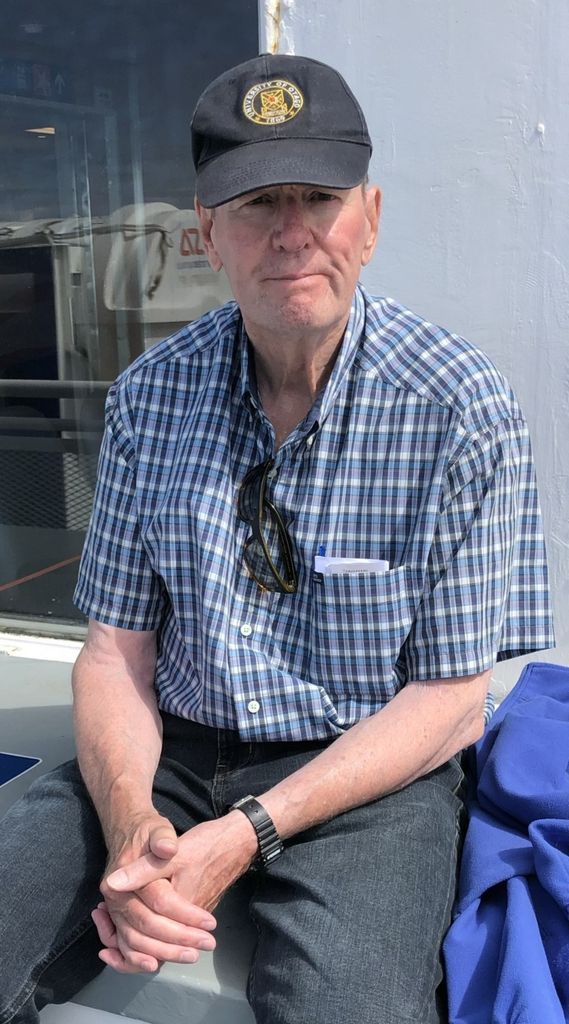

James Miller
Apr 28, 1943 — Sep 11, 2025
James (Jim) Rodger Miller, Ph.D., OC, SOM, FRSC
April 28, 1943 - September 11, 2025
James (Jim) Rodger Miller, Ph.D., OC, SOM, FRSC passed away on 11 September 2025, at the age of 82. Jim was an internationally known historian of Canadian history, a wonderful mentor to his students, a loyal friend, and a true gentleman. In his reflections on his distinguished career, Jim said that "context plays an influential role in shaping the historian." Jim was born 28 April 1943 to Scottish working-class parents James and Isabella (Rodger) Miller in Cornwall, Ontario. His grandparents emigrated to Canada, so that their children would not have to toil in the Scottish mines. From his parents, Jim learned the value of hard work and a good education. He took that to heart. After graduating from Grade 13 from Central Public School and Cornwall Collegiate and Vocational School in 1961, Jim departed from Cornwall for Victoria College at the University in Toronto where he earned a B.A. (1966), M.A. (1967), and a Ph.D. (1972) in Canadian history. Under the tutelage of Drs. Donald Creighton his supervisor, and Ramsay Cook, two of the foremost scholars of their generation, Jim wrote his dissertation ''The Impact of the Jesuits' Estates Act Controversy on Canadian Politics, 1888-1891." Jim's choice was influenced by growing up in Cornwall, a town residentially segregated by anglophones and francophones and divided by Catholic-Protestant religious beliefs. These differences were "normalized," but events unfolding in the 1960s as the debates on bilingualism, the Quiet Revolution, and Quebec separatism took center stage in Canadian politics and raised Jim's political awareness.
In 1966, Jim married Mary McDougall, his high school sweetheart. In 1970, they moved to Saskatoon where Jim had accepted a position in the Department of History at the University of Saskatchewan. In that same year, on October 5 (the day James Cross was kidnapped by the Front de Libération du Québec), they welcomed Andrew his older son and on 25 May 1974, Jim and Mary welcomed their second son, Christian. In 1972, the U of S Board of Governors, as precautionary budgetary measure, gave notice to 170 probationary faculty across the campus that their contracts would not be renewed. That experience led Jim to becoming involved in union politics and he served as the first grievance officer (1978-1980) for the newly certified University of Saskatchewan Faculty Association. He later served as its president and the chair of the negotiating committee (1980-81).
For the next ten years, Jim continued to research on English-French relations and anti-Catholicism and published his first monograph and articles based on his dissertation. By then, Jim was looking for a new topic. Growing up in Cornwall, Indigenous peoples were virtually invisible in the town life even though Akwesasne Reserve was only twelve kilometers away. When he arrived in Saskatoon, Jim was puzzled by the fraught and antagonistic relations between Indigenous and non-Indigenous Canadians. These observations were reinforced when Jim was a visiting professor of Canadian Studies in Tokyo, Japan from 1982-1983. There, he read about the way that the Japanese school system replicated the country's class structures and transmitted the society's values to younger generations. With this insight, Jim re-oriented his research focus on what was then called "Indian-white relations," and now called Indigenous-Settler relations-upon his return to Canada.
On the Order of Canada website, Jim is described as "one of Canada's most original and most distinguished historians. He is more than a competent scholar: he is one of those few historians who has redefined the field." Jim published nine books, numerous refereed and non-refereed articles, book chapters, reviews, technical reports on Native-newcomer relations as it was known at the time. His major works include a survey history of Native-newcomer history, Skyscrapers Hide the Heavens (1989 and later two subsequent editions); the awarding-winning book, Shingwauk's Vision: A History of Native Residential Schools (1996), the first book to examine this dark period in Canadian history; and a history of treaties Compact, Contract, Covenant: Aboriginal Treaty-Making in Canada (2009). Jim received many grants to support his research from the Social Sciences Humanities and Research Council (SSHRC). In 2001, Jim was appointed as a Tier 1 Canada Research Chair in Native-Newcomer Relations at the U of S, a position that he held until he retired.
Jim was generous with his knowledge and expertise and was widely sought after as a graduate supervisor, guest speaker, book reviewer, assessor of manuscripts, commentator and interviewee for many news media. Jim also gave back to his profession; he served on many committees of the Canadian Historical Association including a term its president (1996-97); worked in many capacities with SSHRC (1981-2008); and was appointed to the Historic Sites and Monuments Board (2014-2019). Jim was a committed citizen of the university and served on or chaired many U of S committees including the Council Representative on the Board of Governors (1989-1972). He served as a consultant to numerous federal and provincial government departments, Indigenous people's organizations, lawyers, museums, and served as an expert witness in several court cases. Throughout most of his career, Jim was unstintingly supported by his first wife, Mary, who did much of the caregiving of their children and maintained house and home while navigating her own career. Jim and Mary were a dynamic team, and he was heartbroken when she died in 2004.
Jim's contributions have been widely recognized by numerous awards, prizes, and accolades including but not limited to: named as an Officer of the Order of Canada (OC, 2014); awarded the Killam Prize for the Humanities by The Canada Council (2014); awarded Saskatchewan Order of Merit (2013); awarded Queen Elizabeth 11 Diamond Jubilee Medal (2012); awarded the Social Sciences and Humanities Research Council Gold Medal (2010); inducted as a Fellow of the Royal Society of Canada (FRSC, 1998); and awarded Distinguished Researcher Award, University of Saskatchewan (1997).
Jim was a proud Canadian. When he retired in 2014, he took great pleasure in conducting Canadian citizenship ceremonies. He would made a point of inviting any Canadians present, should they wish, to join the new citizens by re-swearing or re-affirming the oath. Jim was predeceased by his father James (d. 1979), his mother Isabella (d. 1998), his brother John, and (first) wife, Mary (d. 2004). He is survived, and greatly missed, by his wife Lesley Biggs, his sons Christian Miller and Andrew Miller, daughter-in-law Jennifer (nee Hunchak), and his grandson Braegen Miller, as well as by and many other family members, friends, and colleagues. At Jim's request, there will be no public memorial service. In his honour, please consider donating to the Saskatoon Food Bank, or to the National Aboriginal Achievement Foundation.
Guestbook
Visits: 1997
This site is protected by reCAPTCHA and the
Google Privacy Policy and Terms of Service apply.
Service map data © OpenStreetMap contributors